

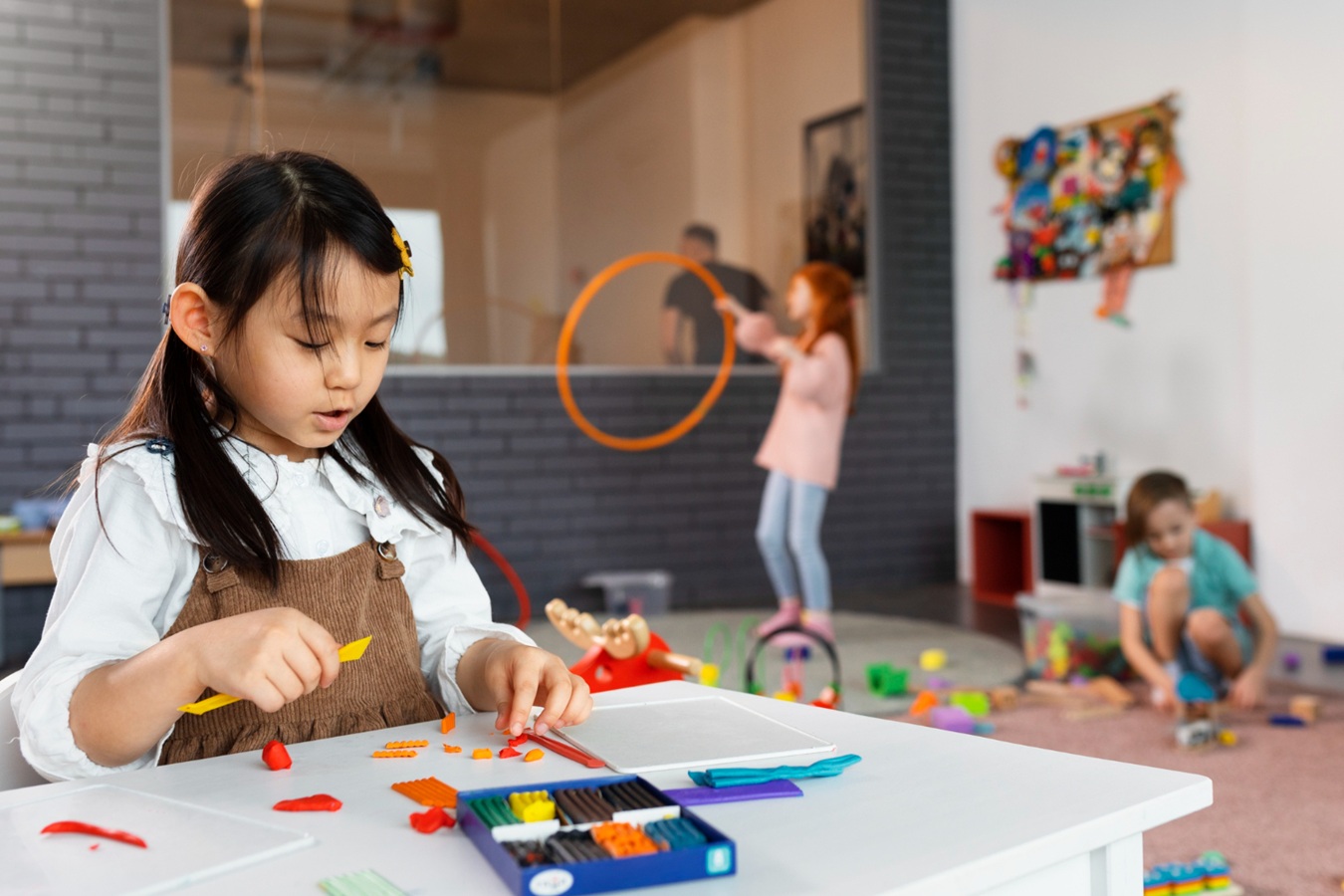
To an adult, play can look simple. A child stacking blocks, pretending to run a grocery store, painting with big messy strokes, or asking “why?” for the tenth time may seem like they are just having fun.
But in early childhood, play is serious learning.
Children learn by touching, moving, testing, asking, copying, creating, and connecting with the people around them. That is why many trusted preschools and early childhood programs use play-based learning as part of their daily routine. It gives children the freedom to explore while still helping them build the skills they need for school and life.
For parents in Northridge, choosing the right early learning center can feel like a big decision. You want a place that feels safe and warm, but you also want to know your child is growing, learning, and becoming more confident every day. Play-based learning supports that balance. It helps children develop language, problem-solving, emotional control, creativity, motor skills, and social confidence in a way that feels natural to them.
At Petite School House, learning through play is part of a thoughtful approach to early education. Through nurturing care, hands-on activities, social interaction, and project-based exploration, children are encouraged to think, wonder, express themselves, and grow.
Play Helps Children Build Stronger Thinking Skills
Young children are naturally curious. They want to know how things work, what happens next, and what they can do with the materials around them. Play-based learning uses that curiosity instead of pushing it aside.
When children build with blocks, they are learning balance, shape, size, planning, and cause and effect. When they mix colors, they are making predictions and noticing changes. When they sort objects, match patterns, or count toys, they are building early math skills. When they ask questions during a project, they are practicing observation and reasoning.
This is one of the reasons play matters so much in an early learning center. It gives children the chance to learn through experience, not just instruction. They are not simply being told what something means. They are discovering it with their hands, their senses, and their imagination.
Play also gives teachers a valuable window into how each child thinks. A caring teacher can watch how a child solves a problem, how they respond to frustration, and what kind of support helps them move forward. This makes learning feel personal instead of rushed or one-size-fits-all.
For parents comparing early learning centers in Northridge CA, this is an important point. The best environment is not always the one with the most worksheets or the longest list of academic promises. It is often the one where children are guided gently, challenged appropriately, and given room to explore.
At Petite School House, the use of Reggio Emilia and Project Approach methods helps children learn through meaningful experiences. Instead of treating play and learning as separate things, this approach brings them together in a way that supports the whole child.
Play Supports Language, Confidence, and Social Growth
A good day care center does more than keep children busy. It helps them learn how to communicate, share space, listen, take turns, and express what they feel.
These skills grow naturally during play.
When children pretend to be doctors, teachers, chefs, parents, or builders, they are practicing language. They use new words, create stories, explain ideas, and respond to their friends. When they play in groups, they learn how to negotiate, solve small conflicts, and understand another child’s point of view.
This is not always neat or quiet, and that is okay. Social learning can be messy. A child may struggle to share a toy, wait for a turn, or explain why they are upset. With the support of patient teachers, these small moments become powerful learning opportunities.
In a nurturing day care center in Northridge, children can practice these skills in a safe place. They learn that their voice matters. They learn how to listen to others. They learn that mistakes can be fixed, feelings can be named, and friendships can grow through kindness and cooperation.
Play also builds confidence. A child who finishes a puzzle, sings during music time, helps a friend, or explains their artwork begins to see themselves as capable. These little wins matter. Over time, they help children feel ready to try new things.
That confidence becomes especially important as children move toward preschool and kindergarten. They are not only learning letters, numbers, and routines. They are also learning how to be part of a classroom community.
Play-Based Learning Prepares Children for School
Some parents worry that play-based learning means children are not getting ready for school. In reality, the opposite is true when the program is well designed.
Children need more than memorization to succeed in school. They need to follow directions, ask questions, manage emotions, work with others, stay curious, and keep trying when something feels hard. Play gives them a natural way to build those abilities.
Through stories, songs, projects, art, movement, sensory activities, and group play, children develop early academic skills while also strengthening their independence. They learn how to focus on a task, clean up after an activity, move through a routine, and participate with others.
This is why many parents searching for the best preschools in Northridge look for programs that combine structure with warmth. Children need guidance, but they also need joy. They need teachers who understand development, but they also need classrooms where they feel comfortable being themselves.
Petite School House offers programs designed for different early childhood stages, from toddlers to preschool and kindergarten. This matters because a two-year-old, a three-year-old, and a four-year-old do not learn in exactly the same way. Each age group needs activities, routines, and support that match where they are developmentally.
A strong play-based program respects those differences. It does not rush childhood. It helps children grow step by step.
Key Takeaway: Play Is How Young Children Learn Best
Play-based learning is not just a trend. It is one of the most natural ways young children build the skills they need for the future.
Through play, children learn to think, speak, listen, move, imagine, solve problems, and build relationships. They gain confidence through hands-on experiences. They develop early academic skills in a way that feels meaningful and age-appropriate.
For parents comparing preschools, daycare options, or early childhood programs in Northridge, the goal is to find a place where learning feels alive. A great school should offer safety, care, structure, creativity, and connection. It should help children feel seen and supported while giving them room to explore the world around them.
That is what makes play-based learning so powerful. It helps children love learning before they ever realize they are doing it.
Ready to Choose an Early Learning Center That Makes Play Meaningful?
Petite School House gives children a warm, nurturing place to learn, play, and grow in Northridge. With caring teachers, hands-on activities, and a thoughtful approach inspired by Reggio Emilia and project-based learning, your child can build confidence, curiosity, and important early skills every day.
Contact Petite School House today to learn more about its programs or schedule a visit.