

Emotional Growth and all of the related skills that stem from it are vital for a healthy early childhood. However, many factors influence the development of these emotional abilities, including the environments where children spend time and the activities they engage in throughout the day.
One of the most common environments where children spend time before they are of school age is in a day care center. That’s why many parents in Northridge, California, want to know exactly how day care centers support their kids’ emotional growth. So, in today’s article, we will answer that question.
At Petit School House, we recognize the impact of early learning centers and are committed to ensuring your children thrive. Through play and guided activities, we encourage emotional development. For example, by helping children learn to behave in social situations, regulate their emotions, and resolve conflicts constructively.
Learning Social Cues & Behaviors
At a day care center, kids learn to treat others with respect and dignity, to interact and behave in socially acceptable ways, while considering their individuality. Through exposure to kids their age and day care providers, children learn to build relationships outside their family nucleus, a skill that will help them throughout their lives.
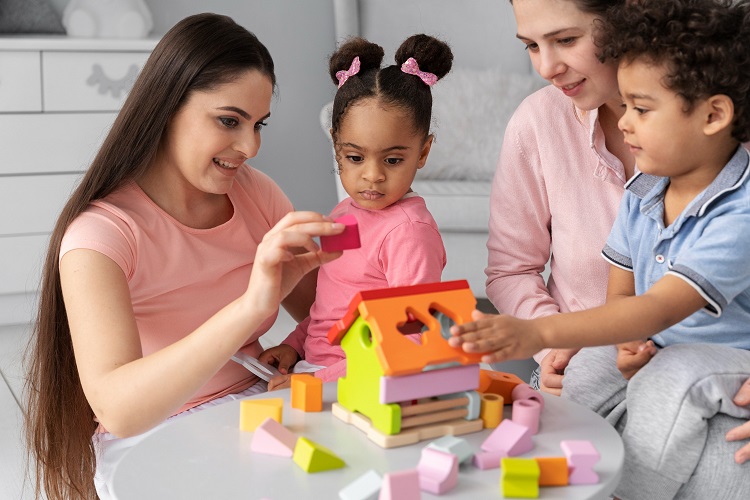
Moreover, thanks to group activities and guided play, kids learn to communicate and cooperate with other children. This allows them to develop empathy, patience, and tolerance of different personalities and backgrounds, all while cultivating a sense of belonging. Caregivers create a safe environment where children can have positive, age-appropriate interactions and form long-lasting friendships with their peers.
Understanding how to independently interpret day-to-day social cues in a supervised environment helps children feel confident in handling varied and challenging situations later in life.
Fostering Emotional Regulation
External and self-regulation are two of the most important emotional skills that children need to develop during their early childhood. Through day care, kids learn to name and identify their emotions, the first step towards regulation. When kids can name how they are feeling, they can also understand how to act accordingly and ask for help from caregivers when needed.
For example, at Petit School House, kids learn to regulate and cope with everyday situations, such as separation anxiety. Our caregivers guide children through the regulation process, from helping them name how they are feeling to guiding them on what to do in each case to address it healthily. Eventually, kids internalize the learned strategies and learn to self-soothe.
Emotional regulation also involves managing strong emotions such as frustration and anger. When children feel supported and secure, they learn to channel these emotions constructively and positively, such as through art or dance, while still expressing them. This enables them to build self-esteem, fostering enthusiasm and resilience in the face of new experiences.
Resolving Conflict Positively
As in any social group, conflicts inevitably arise between children. Rather than avoiding the issue or solving it for themselves, our day care providers guide kids through the resolution process. Caregivers teach them healthy coping, mediation, and negotiation skills, which will be useful not only at day care but throughout their lives.
At Petit School House, children learn to develop problem-solving skills, which help them build self-confidence as they realize they can resolve conflicts successfully on their own. Nevertheless, we strive to foster safe environments where kids know when to ask for help and to inform caregivers of stressful situations.
Learning to handle conflicts is a skill that enhances children’s resilience, enabling them to tackle more challenges later in life, such as difficult schoolwork or complex career decisions.
Communicating Ideas Clearly
Language development in early childhood goes beyond just learning to read and write. At Petit School House’s early learning center, verbal group activities help kids not only learn new vocabulary and develop language comprehension, but also learn to formulate and express their ideas clearly.
Our caregivers encourage communication in a supportive environment, fostering self-confidence and providing kids with foundational language skills that help create positive social relationships. For example, when kids communicate their needs and wants and ask for help when needed, they can clear up any misunderstandings and avoid confusing interactions.
Moreover, language skills are a key element in helping kids’ creativity and imagination bloom, which will be useful not only in art and creative disciplines but also in thinking outside the box when dealing with daily challenges and problems.
Developing Cognitive Abilities
Storytelling, arts and crafts, and hands-on projects foster curiosity and problem-solving skills in children while introducing them to early learning concepts in ways suitable for their age. These activities build their confidence in exploring new ideas, asking questions, and interacting with the world around them.
This structured approach, provided by a day care center in Northridge, such as Petit School House, prepares children for a smooth transition into kindergarten and early academic experiences. Kids learn how to follow routines, for example, by understanding when and how to eat, when it is time to play, and what to do when the sun sets, and it is time to go to sleep.
Key Takeaways
- Day care centers support emotional growth through social play and guided activities.
- Children learn empathy, cooperation, and respectful behavior with peers.
- Kids build emotional control by learning to recognize and manage feelings.
- Conflict resolution skills help children gain confidence and resilience.
- Communication and hands-on learning strengthen language and cognitive skills.
Not All Day Care Centers Are the Same
Choosing the right day care center in Northridge means looking beyond convenience and understanding how each program supports your child’s growth. The right environment makes all the difference in your child’s emotional and social development.
At Petit School House, our dedicated team is here to support your family, answer your questions, and help you feel confident in your choice. Contact us today to learn more. We’re here to guide you every step of the way.